Serving London & Surrounding Areas Mon–Sat: 7AM–9PM
Gas Safe · Fully Insured

Wet vs Electric Underfloor Heating: Which Should You Choose?

Both warm your floor, but they differ sharply on install cost, running cost and lifespan. A side-by-side comparison — including the cases where electric is the better pick.

The Short Answer

What's the difference between wet and electric underfloor heating?

Wet (hydronic) underfloor heating circulates warm water through pipes beneath your floor, fed by your boiler or a heat pump via a manifold. Electric underfloor heating uses heating mats or cables wired into your mains electricity, usually under tile.

Rule of thumb: electric suits a single small room; wet suits everything else. Electricity costs several times more per unit of heat, so the bigger the area, the more decisively wet wins.

Key fact: Wet UFH runs at 35–45°C flow temperatures and is the only underfloor option that works with a heat pump — the lowest running costs of any heating system.

Side by Side

Wet vs electric underfloor heating: comparison table

Costs are typical London guide ranges, not fixed quotes — confirmed by free written quote.

Wet (Hydronic) UFH Electric UFH
Install cost (guide) £85–£120 per m² installed Lower upfront — typically £50–£75 per m² installed
Running cost Lowest available — low-temperature water from boiler or heat pump High — mains electricity costs several times more per unit of heat
Best use cases Whole house, extensions, kitchens, renovations, open-plan Single small bathroom or ensuite of a few m²
Floor height added Within screed (new builds) or ~15–25mm low-profile retrofit Minimal — roughly 3–6mm mat under tile adhesive
Heat-up time Slower to warm, but holds steady, even heat for hours Fast response — good for short bursts of warmth
Heat pump compatible Yes — the ideal pairing No — runs directly off mains electricity
Lifespan & repair Pipework typically rated 50+ years; manifold serviceable Element failure usually means lifting the floor finish

When is electric underfloor heating the right choice?

For a single small bathroom or ensuite, electric mats are often the sensible pick. The install is quick and cheap, and a room used twenty minutes a day won't rack up painful bills.

Where electric goes wrong is scale. Tile a 25m² kitchen-diner over electric mats and you discover the running cost the following winter.
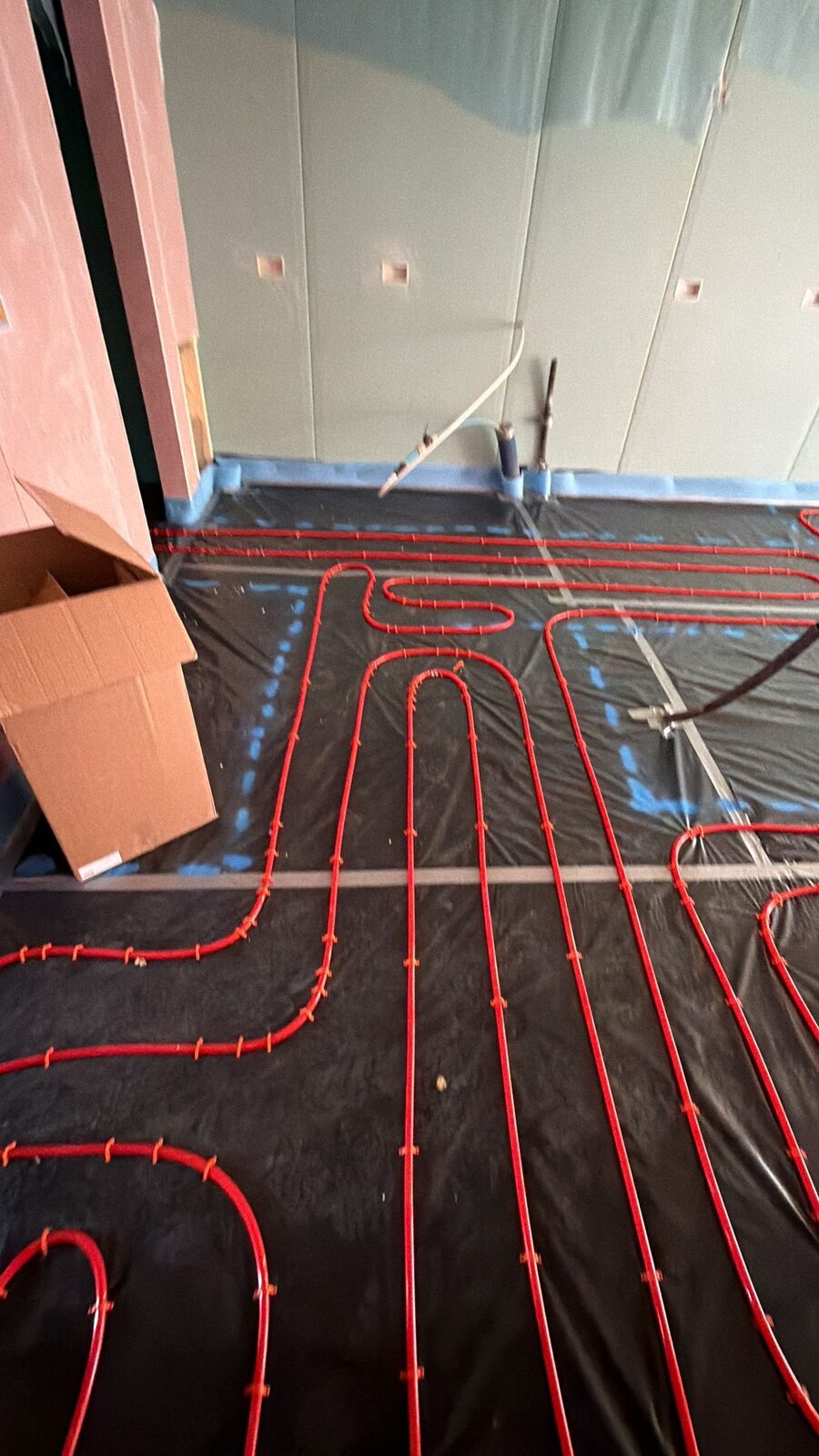
Wet underfloor heating pipe loops laid out across a room before screeding in a London installation
Hydronic pipe loops before screeding — warm water at 35–45°C does the work radiators need 60–70°C to match.

Why is wet underfloor heating cheaper to run?

Electric converts mains electricity straight into heat, at electricity prices. Wet UFH heats water with a boiler or heat pump, and the floor only needs 35–45°C — not the 60–70°C radiators demand.

A wet system installed today reconnects to a heat pump later — no floor comes up. Electric can never make that switch. Full pricing is in our underfloor heating cost guide for London.

What about renovations and existing floors?

Wet UFH doesn't mean digging up floors. Low-profile boards go over the existing floor at around 15–25mm of added height — workable even in Victorian terraces and period flats. Our retrofit underfloor heating guide covers how it works.

Meridian Plumbing wet underfloor heating installation in a London living space with French doors
A wet UFH installation in progress — every loop designed for the room it heats.

Why Meridian specialises in hydronic systems

Wet UFH is a design job: heat loss calculations, pipe spacing, zoning and manifold balancing all set before the screed goes down. We've installed it across London for over 5 years — Gas Safe registered engineers, £5M public liability insurance, Ambiente manifolds, workmanship guarantee.

See recent installations on our work page, the systems on our underfloor heating service page, or the areas we cover, including Hampstead, Islington and Fulham. Unsure? Ask us — straight answer, free written quote within 24 hours.

Wet vs Electric FAQs

Your Comparison Questions, Answered

The questions London homeowners ask when choosing between wet and electric UFH.

Wet, by a wide margin. It heats water at 35–45°C with a boiler or heat pump, while electric converts mains electricity, several times more expensive per unit of heat, directly into warmth. Over the system's life, the running-cost savings outweigh the higher install price.

Yes — for a single small bathroom or ensuite of a few square metres. The install is cheap and quick, and the higher running cost matters less on a small area used for short periods. For anything larger, wet is the better choice.

No. Electric UFH runs directly off mains electricity, so it gains nothing from a heat pump. Wet UFH is the ideal heat pump partner — and future-proofs your home if you move off gas later.

Quality wet UFH pipework is rated for 50+ years, and the manifold and controls are accessible and serviceable. Electric elements are embedded under the floor finish — if one fails, the floor usually has to come up.

Yes. Low-profile retrofit systems add as little as 15–25mm to the floor height, practical in Victorian terraces and flats. We assess your floor build-up at a site survey and send a written quote within 24 hours.

Not Sure Which System Fits Your Home?

Tell us about the space and we'll give you a straight recommendation — plus a free written quote within 24 hours from Gas Safe registered, fully insured engineers.

Call Now Free Quote